Platform Comparisons
Part of Creative management technology
Comparing dynamic creative systems with ordinary ad serving
Compare what ordinary ad serving and dynamic creative each select, control and report before choosing a workflow for ad variations.
Ordinary ad serving selects an eligible ad and one of its assigned creatives. A dynamic creative system can also select content within a creative, using a template, data and rules. The choice is whether to maintain finished versions or govern variations from shared components.
Compare the work involved
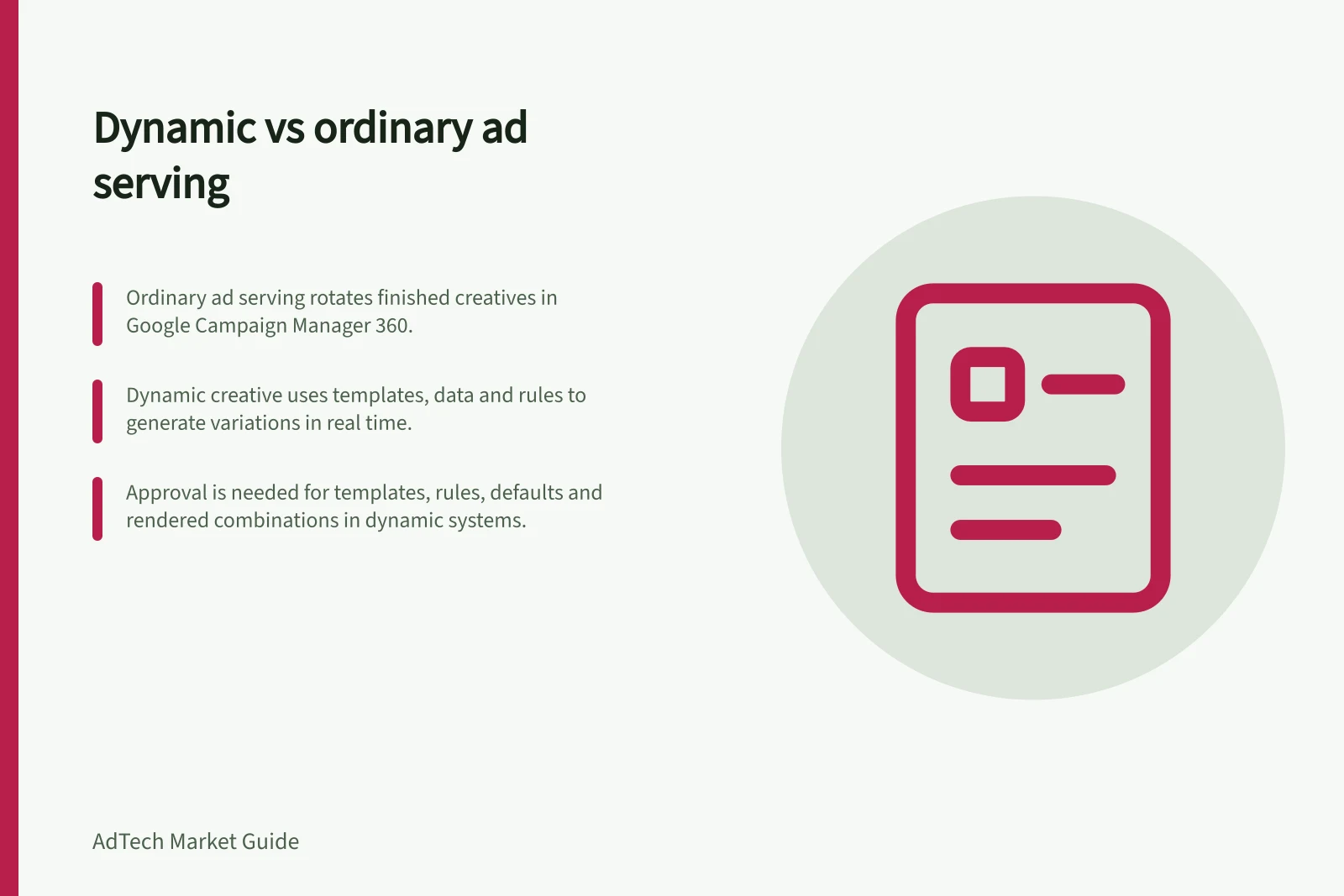
Google Campaign Manager 360 is the named ordinary-serving example: eligible assigned creatives may rotate. This selects among finished files; dynamic creative can also select content inside a creative.
The dynamic-creative side is described by function rather than a separate product name: a template, data and rules select content, alongside any ad-server selection. Ordinary serving changes files, assignments, run dates or rotation; dynamic creative can change feed values, profile fields, rules or the template.
Finished executions and assignments need approval for ordinary serving. Dynamic creative also needs approval of the template, permitted content, rules and defaults, and checks of eligibility, selected content and the rendered combination.
Ordinary Ad Serving vs Dynamic Creative Systems: Key Differences
- Ad Selection Method
- Selects from finished ad creatives
- Content Variation Control
- Fixed within each creative file
- Dynamic Content Handling
- Not supported – requires separate files
- Template Use
- None – no shared component framework
- Data-Driven Updates
- Manual file updates required
- Approval Requirements
- Each finished creative needs approval
- Creative Maintenance
- High – multiple versions for every combination
- System Flexibility
- Limited to pre-built variations
- Dynamic Creative System (e.g., DCM)
- Uses templates, data and rules to generate variations
- Content Customisation
- Real-time selection from data feeds
- Template & Rules Approval
- Required – template, rules, defaults and eligibility
- Ongoing Maintenance
- Lower – update feed or rules instead of files
- Reporting Granularity
- Requires unique identifiers for tracking variations
Operational Impact: Dynamic Creative vs Ordinary Serving
- Number of Files to Maintain
- High (one per combo) – ordinary
- Update Frequency
- Daily/real-time – dynamic
- Approval Overhead
- Per file – ordinary; per template/feed – dynamic
- Scalability
- Low for large catalogues – ordinary
- Personalisation Capability
- Limited – ordinary
- Reporting Complexity
- High without unique labels – both
Apply the distinction to a campaign
Take a fictional Australian outdoor retailer with one short-lived brand message. A small set of approved creatives in the required sizes may be manageable, and ad-server rotation can distribute those files.
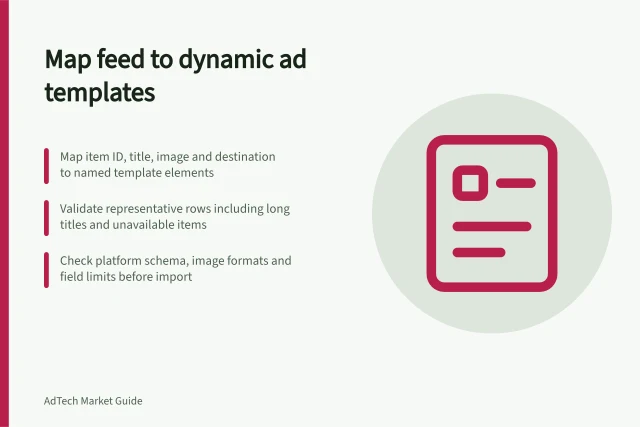
If the retailer wants to show items from a changing catalogue, dynamic creative may reduce the number of finished files to maintain. It also creates work: item IDs, images, copy, destinations, eligibility rules and a truthful default must be controlled. A template cannot ensure that a particular item remains available.
Count the combinations that genuinely need different treatment and how often they change. If every finished combination needs separate approval, a dynamic system may move the work rather than remove it. If the team can approve a stable template and controlled content rules, updates may be simpler.
Compare controls and evidence
Ask where each team configures eligibility, assignments, rotation, content rules, defaults and published versions. A creative ID alone may not identify the product or message that appeared, so decide which reporting label or variation identifier is needed.
Preview a valid match, no match, expired offer and every required size. Check how feed-driven variations appear and how the system behaves when no match is found. Previews check configuration; live delivery and reporting require separate review.