Platform Comparisons
Part of Demand-side advertising platforms compared
Comparing managed-service and self-service DSPs
Compare DSP operating models by campaign control, workload, reporting access and service accountability.
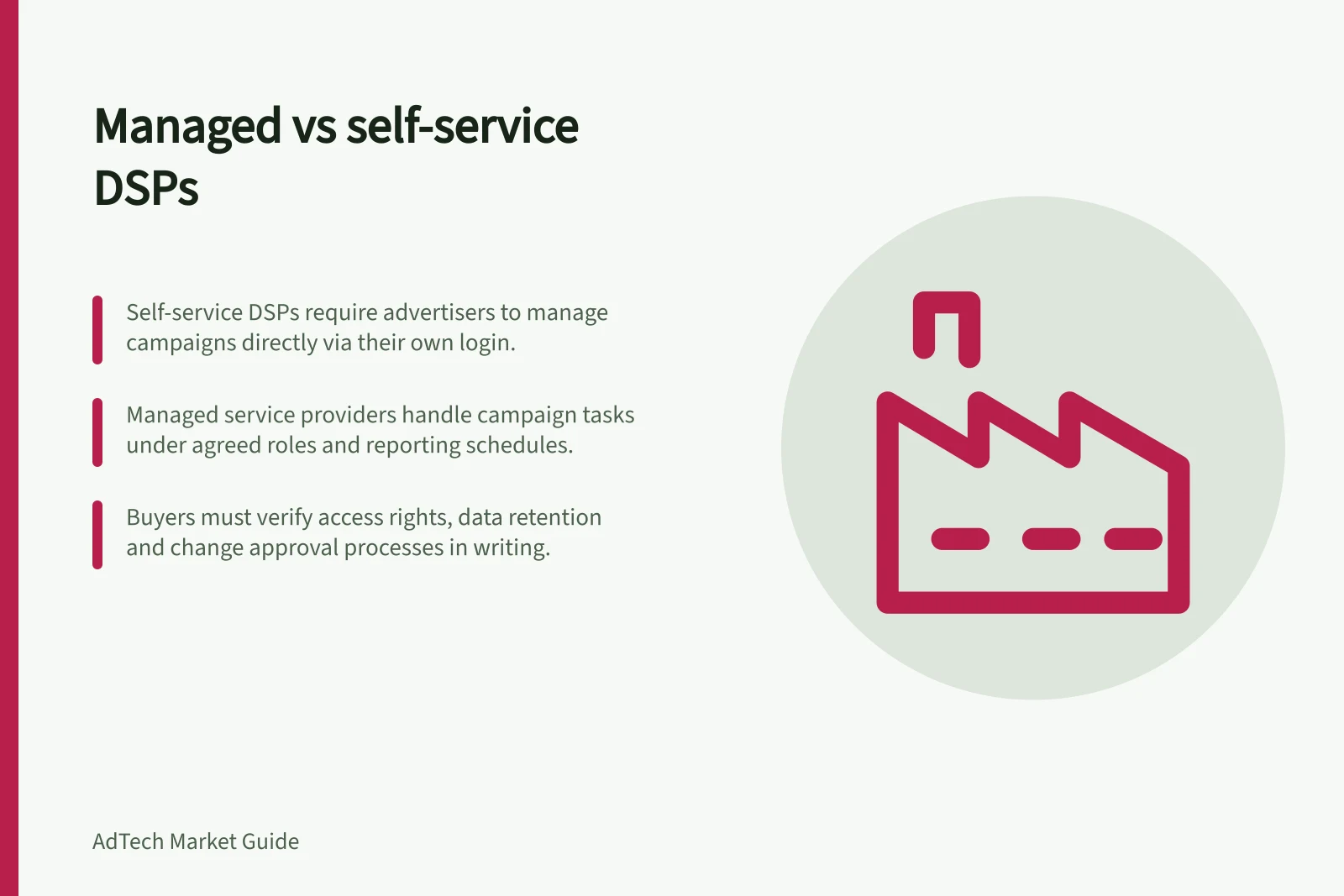
The key difference is who does the campaign work. In self-service, the advertiser or its agency operates the DSP. In managed service, a provider performs agreed tasks for the buyer. Neither label tells you exactly which settings, reports or approvals the buyer can access, so check the proposed roles and agreement.
Assign the work
List who will build campaigns, select supply, set bids, approve creative, monitor pacing, investigate delivery and explain results. For each task, set who can act, who must approve a change and how requests are handled.
Amazon says Amazon DSP has evolved into Amazon Ads Agent. The source says Amazon DSP was available with self-service and managed-service options; its programmatic capabilities are now available in DVA+ using advanced settings.
The Trade Desk's Certified Service Partners page features a Goodway Group blurb describing its mix of consultancy, digital media agency and technology-company services.
A provider may operate campaigns for a buyer under a separate agreement; that does not establish the buyer's own login or editing rights. Display & Video 360 reporting access also depends on user roles and advertiser or partner permissions.
Key DSP Access and Role Considerations
- Amazon DSP Evolution
- Now part of Amazon Ads Agent via DVA+ with advanced settings
- The Trade Desk Certified Partners
- Includes hybrid providers like Goodway Group (consultancy, agency, tech)
- DV360 Reporting Access
- Depends on user roles and advertiser/partner permissions
Compare control and accountability
| Task | Self-service check | Managed-service check |
|---|---|---|
| Campaign changes | Who has access, skill and cover? | Who makes a requested change, and when? |
| Inventory | Can the buyer inspect and change supply settings? | Will the provider disclose routes and apply exclusions? |
| Reporting | Can the buyer run and export the required reports? | Which files will be supplied, at what level and frequency? |
| Delivery issues | Who diagnoses and resolves them? | What evidence accompanies the provider's explanation? |
| End of service | What access and data can the buyer retain? | What will be handed over? |
A managed-service buyer may hold a login without permission to edit every setting. A self-service licence may still rely on an agency trader. Ask for a demonstration of the roles proposed for your account.
Compare the full commitment
Ask for written media, platform, data, measurement and service charges, minimum commitments and terms for changes. Check how those charges relate to the spend fields in reports.
As an evaluation exercise, request one inventory exclusion, one pacing change and one report field. Then have the provider describe who would act and what the buyer would receive.
Choose the arrangement your team can oversee. Self-service requires people and time to run campaigns; managed service requires clear instructions, response commitments and enough evidence to assess decisions.