Vendor Due Diligence
Part of AdTech vendor due diligence
Reviewing data portability in an AdTech contract
Specify the AdTech records, formats, rights and handover timing needed to make a contract’s export promise usable.
A data-portability clause works when it names the records you need. It should grant a usable right to receive and use them, and set a handover route and deadline.
Review the wording beside a representative export before relying on a general promise of “data access”.
Specify the handover
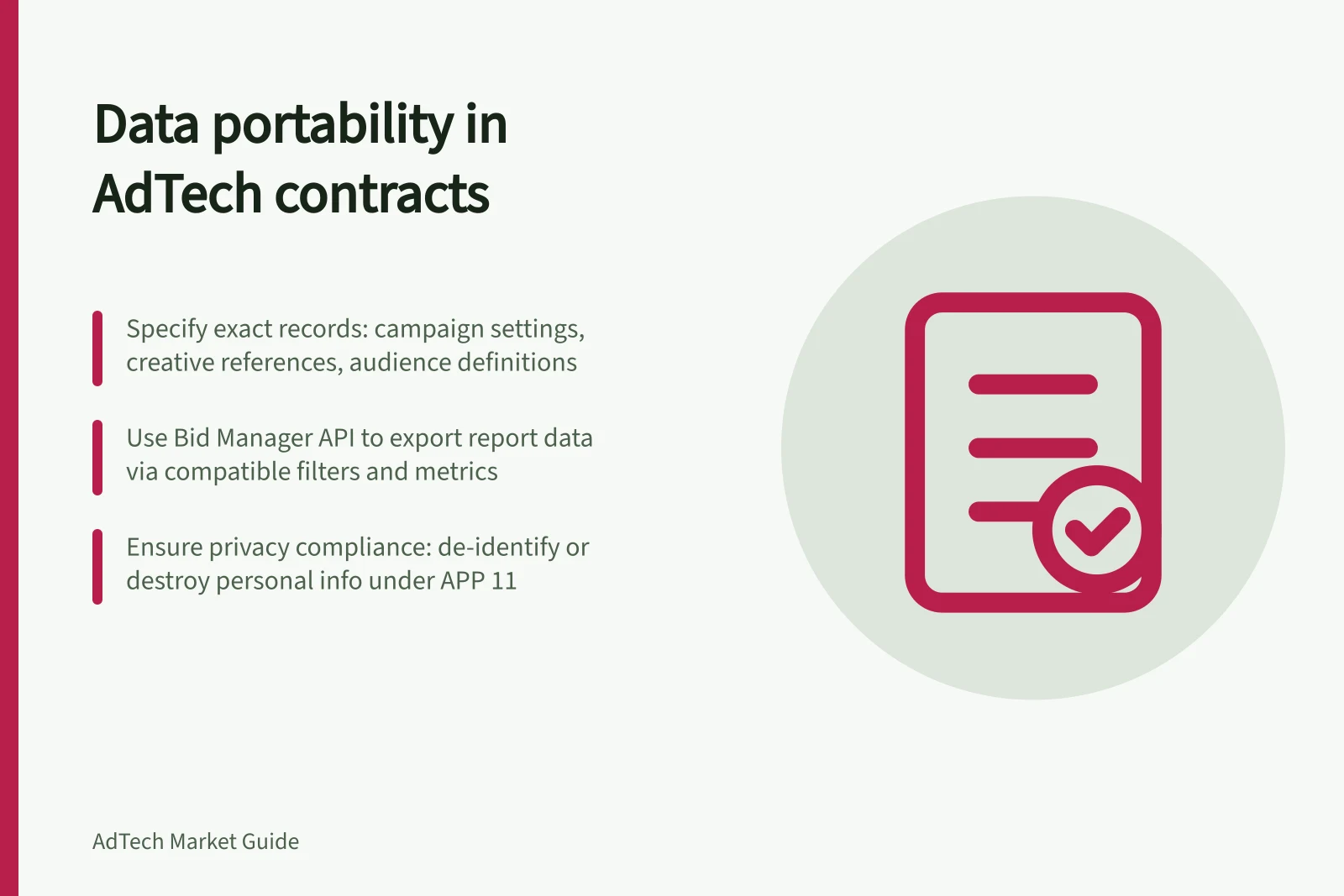
List campaign settings, creative references, audience definitions, reports, billing records and event files only where each is needed. For every item, identify its owner, business purpose and destination after termination. State whether an aggregate report is sufficient or whether the task requires event-level records.
For an export route, the Bid Manager API lets you create a Query for Display & Video 360 report data using compatible filters, dimensions and metrics. A successful query returns a URL for downloading the generated report.
Test the right and the route
For each required dataset, specify the export interface, format, fields and identifiers. State who may request and receive it, the historical period available, delivery timing and any charge. Also state whether the agreement permits storage, onward transfer or use by a replacement provider. Include the time zone, currency and correction rules needed to interpret the files.
Request a representative file while the account is active. Check whether the intended recipient can read it and whether its identifiers and granularity serve the stated purpose. A CSV of totals cannot reconstruct an event trail that was never supplied.
Check the historical period, delivery deadline and any retention limit for the export route. Arrange your own copy if the agreement does not provide a longer archive.
Keep privacy duties separate
An export right does not authorise every onward use of audience or event data.
For an Australian arrangement, have the privacy owner assess the actual identifiers, purposes and recipients.
An APP entity may hold personal information it no longer needs for any purpose for which the APPs allow use or disclosure. APP 11 then requires reasonable steps to destroy the information or ensure it is de-identified.
That requirement applies except where the personal information is part of a Commonwealth record. It also does not apply where the entity is required by or under an Australian law, or by a court/tribunal order, to retain the personal information.
Attach an export schedule to the agreement: dataset, fields, period, format, delivery method, deadline, permitted recipient and owner. Compare received files with it before access closes. Describe any essential record that cannot be exported or used by the successor as a purchasing limit.