Platform Comparisons
Part of Understanding the advertising technology supply chain
What an ad server, DSP and SSP each do
Compare the decisions made by publisher ad servers, DSPs and SSPs, including why an SSP auction win may not become a served ad.
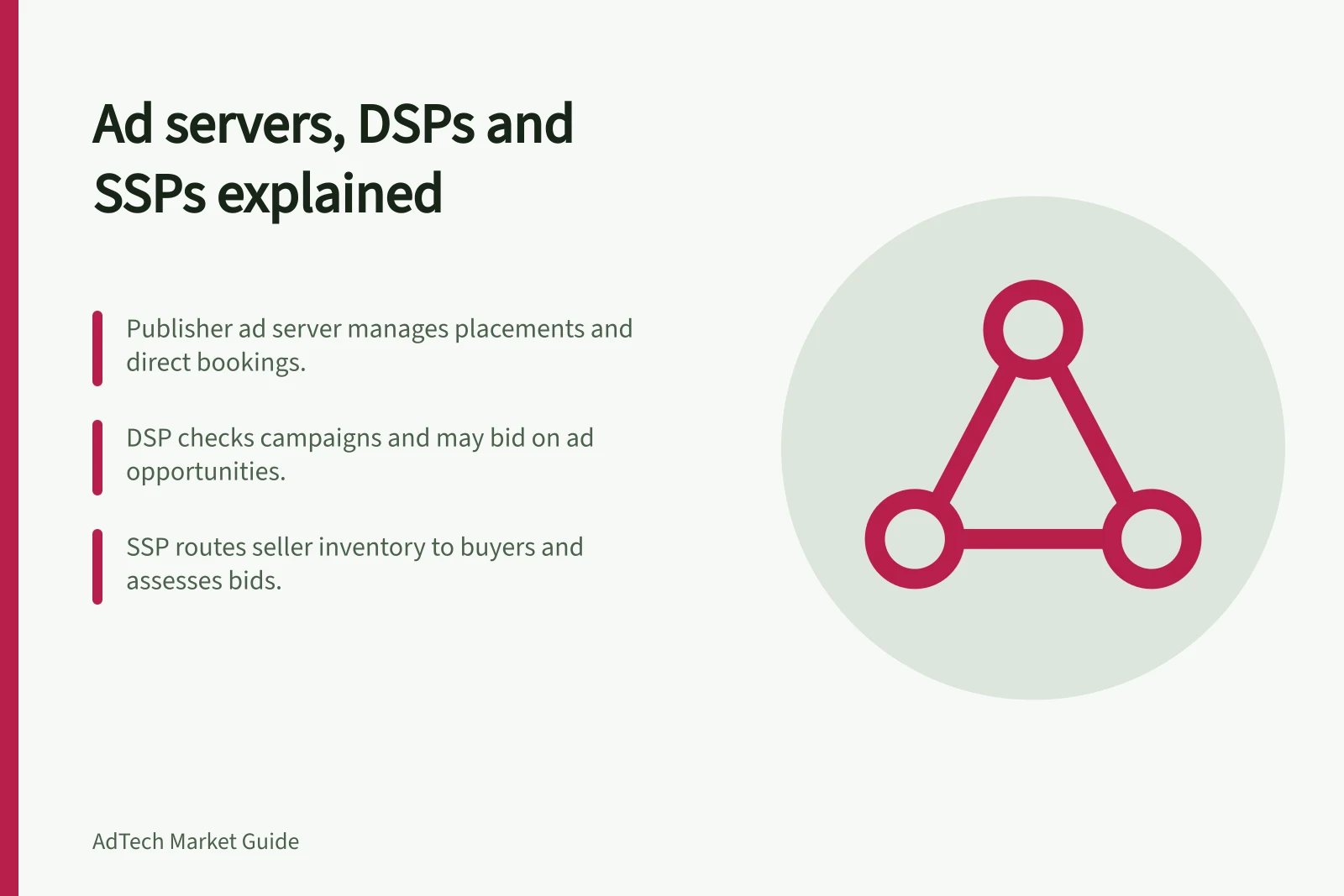
A publisher ad server manages ad placements and booked campaigns, and often makes the final fill decision. A demand-side platform (DSP) evaluates opportunities for a buyer and may bid. A supply-side platform (SSP) routes a seller’s eligible opportunities to demand and assesses responses. To tell them apart, ask whose decision each system makes.
Three jobs at one impression
| System | Works primarily for | Main job | What it does not establish alone |
|---|---|---|---|
| Publisher ad server | Publisher | Manage placements and booked campaigns; often decide the final fill | That every opportunity enters an open auction |
| SSP | Publisher or seller | Route eligible supply to buyers and assess returned bids | That its preferred bid appears on the page |
| DSP | Advertiser or buyer | Check opportunities against campaigns and bid or decline | That a bid wins or its creative renders |
These are functions, not necessarily separate companies. One company can operate several systems, and an exchange can perform auction or selling functions.
Why there can be two ad servers
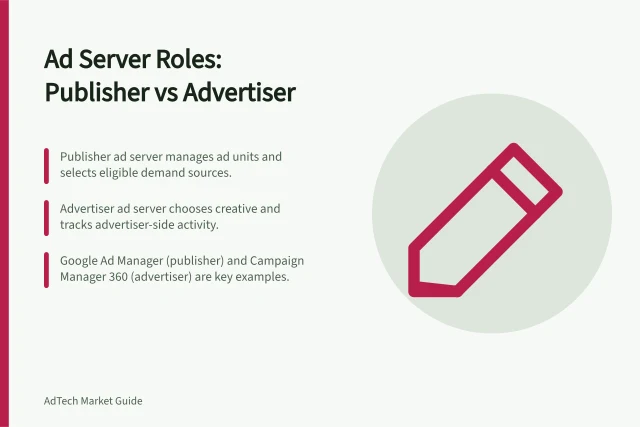
The publisher’s ad server controls its placement configuration and direct bookings. Rules for how it handles eligible booked campaigns and exchange demand vary by product and setup.
An advertiser may use a separate ad server to select or deliver creative, or to track an ad served elsewhere. That system’s role does not give it control over the publisher’s decision to fill the placement.
When someone says “the ad server chose the winner”, ask whether they mean the publisher’s placement decision or the advertiser’s ad and creative selection.
How the systems meet
In one programmatic route, a publisher-side system sends an opportunity to an SSP. The SSP may validate it and invite eligible buyers. A DSP checks campaign settings and can return a bid with proposed ad information.
The SSP qualifies returned bids and passes an eligible result towards the final decision maker. The publisher ad server may then select it, choose another source or fulfil a direct booking.
In a header-bidding setup, bid gathering can happen before the ad-server call. The ad server may still compare those bids with other eligible ads. The actual integration determines the order.
Find the decision that stopped delivery
If a campaign bids but rarely appears, distinguish a DSP no-bid or timeout from an SSP rejection, a later publisher decision or a creative-delivery failure. Each calls for evidence from a different system. A single win-rate figure cannot explain every handoff.
Troubleshooting why a campaign rarely appears despite bidding
- Check DSP logs for no-bid or timeout eventsConfirm whether the DSP ever submitted a bid due to targeting or latency issues.
- Review SSP rejection reasonsVerify if bids were rejected for invalid format, low price, or policy violations.
- Inspect publisher ad server decisionsCheck if direct bookings or higher-priority campaigns are blocking the bid from serving.
- Validate creative delivery and renderingEnsure the creative loads correctly and is not blocked by ad blockers or technical errors.